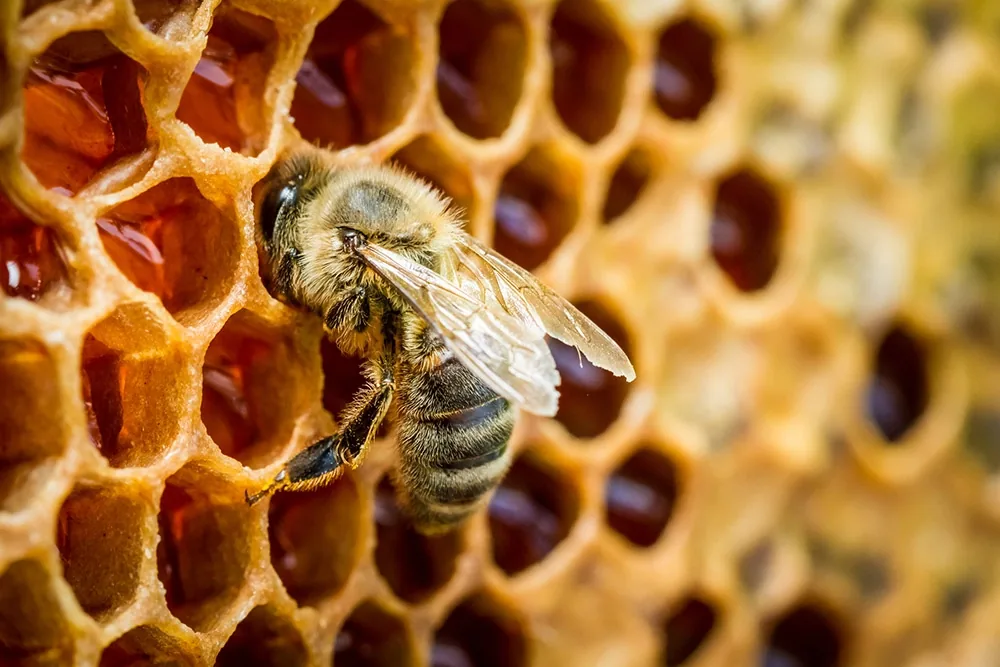
Apis mellifera ligustica
50,000 bees,one single place
The genetics of the Italian bee, the ecosystem of the Conza Oasis and the way we work: this is where the honey gets its character.
- Apis mellifera ligustica
- Hives never moved
- Varroa treated with oxalic acid
- No antibiotics
The genetic choice
Why theItalian bee
Beekeepers all over the world value the Italian subspecies: it is gentle, productive and naturally follows the local blooms.
In stationary beekeeping like ours, where the bees never leave their territory, this harmony with the Conza Oasis matters more than anything.
- Bees per hive at peak
- 50.000
- Antibiotics used
- 0
- Hives moved
- 0
- Typical foraging radius
- 3 km
Gentleness
It is a gentle bee: we can inspect it often without stressing it, read the colony's behaviour and spot a problem early.
Adaptability to climate
It copes well with the swings of the Irpinian Apennines, harsh winters and hot summers, and follows the seasonal rhythm of the Oasis.
In step with the flowers
The colony builds up before the May sulla, slows down after the acacia and keeps pace with the summer wildflowers.
Hygienic behaviour
It tends to remove diseased brood and some of the mites. This helps to keep varroa in check and to reduce treatments.
Who lives in the hive
A societyof fifty thousand
Every bee has a precise role. Understanding who does what explains why Priscilla's honey is the way it is.
The queen
She lays up to 2,000 eggs a day in high season. Her pheromones regulate the colony: her health is the hive's health. We check she is there at every inspection.
The worker
In her lifetime she flies hundreds of kilometres and visits thousands of flowers. First a nurse, then a builder, finally a forager.
The drone
The colony's male. His job is to mate with queens from other hives, ensuring genetic diversity. When he is driven out in autumn, the season is over.
A life in six weeks
The life cycleof the worker bee
From the heart of the hive to the open field. That is why every season is unique: May's bees are not July's.
Inside the hive
-
Days 1–3
Cleaning cells
Newly emerged, she cleans her own cell and the ones around it.
-
Days 4–9
Nurse
Her hypopharyngeal glands produce royal jelly for the larvae. She never leaves the hive.
-
Days 10–18
Builder and storekeeper
She produces wax, builds comb, receives nectar from the foragers and processes it. She fans her wings to regulate temperature and humidity.
At the entrance, then outside
-
Days 19–21
Entrance guard
She defends the hive from intruders and learns the colony's scent, which is different for every hive.
-
Day 22 onwards
Forager
Outside at last. She flies up to a few kilometres and visits hundreds of flowers a day: she is the one who brings back the sulla, acacia and wildflower nectar.
How we run the apiary
The colony first,then the harvest
There is no honest honey without a healthy apiary. Every intervention has a reason and puts the bees' wellbeing before production.
Varroa control
No antibiotics. We treat only when there is no brood: it is effective, allowed in organic beekeeping and leaves no residues in the honey.
Honey harvest
We remove the honey supers only when the hive's weight exceeds the reserve the colony needs. The data decides.
Moving hives
The hives don't move. Less stress for the bees, a certain botanical origin, a honey that speaks of a single place.
Monitoring
Weight, temperature and humidity measured in the Priscilla hive. The history is published on the Our method page.
Inspections
We check the queen, diseases and available space. We intervene as little as possible and observe as much as possible.
Winter
In winter we don't open the hives. If the sensor flags an anomaly, we step in; otherwise we let them rest.
“The best honey comes from healthy bees and hands that respect them.”