Our terroir
Scientific rigour,roots in the land
The character of Conza della Campania, one small batch at a time.
- From research to the apiary
- Stationary beekeeping
- Clay and lake
- Small batches
The origins
Sciencecomes first
Vie del Lago combines the outlook of the wine world with the rigour of research. Its foundations are studies in agricultural science and an understanding of biological systems.
Here beekeeping means analysis, zoning and observing plants and climate. Every decision, from where to place the hives to how to follow the blooms, follows a method: the hive is a living laboratory that reflects the state of the environment around it.
We want to interpret an ecosystem, turn it into a small, recognisable batch and look after it with the precision of someone who studies nature before harvesting it.

The stationary choice
One hive,one place
Many beekeepers move their hives to follow the blooms. We don't: we never take our bees to other regions and we never blend nectars of different origins.
Like single vineyards in the great wine regions, each hive expresses a single plot of land. Its honey is a snapshot of that bloom, that season, that climate.
It is a choice that limits production and increases its value. That is how our cru honey is born: traceable, tied to a place, different with every batch.
The soil and the lake
A biologicalboundary
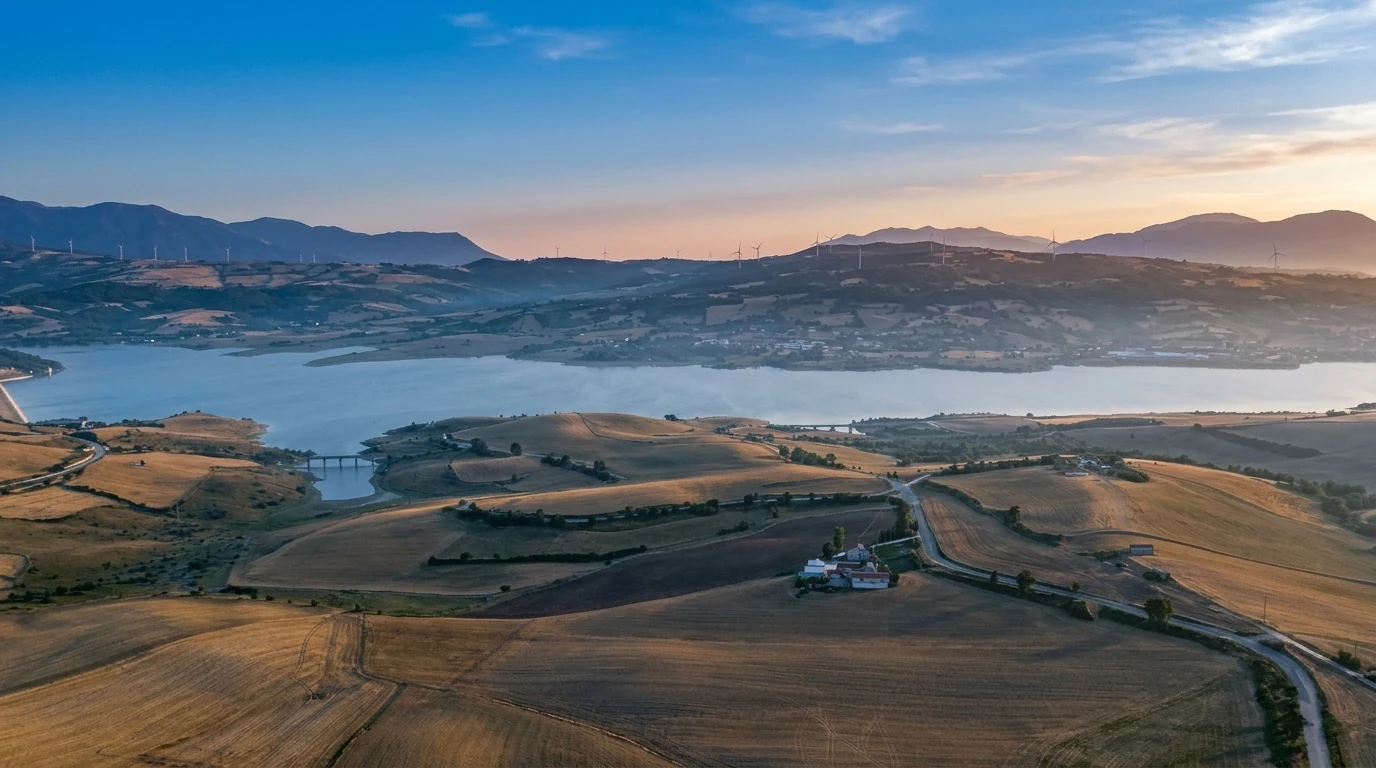
In the heart of Irpinia, the clay subsoil, the nearby lake and the absence of intensive farming create an intact mosaic of plant life.
Clay holds moisture and micronutrients, influencing the plants and therefore the composition of the nectar. The result is a raw material with a recognisable structure and sense of place.
A May morning
Dawnover the Priscilla apiary
At half past five on a May morning, Lake Conza is still wrapped in the low mist of the Ofanto Valley. The first bees leave the hives before the sun clears the ridge of the Apennines: they already know where to go.
The sulla has been in flower for three weeks but hasn't yet peaked. The nectar is more concentrated in the cool hours. The bees forage silently over a clay meadow that has never known herbicides. The smell is wild, faintly grassy: it is the smell of honey taking shape, in these supers, on this soil.
The low light, the damp air, the scent of sulla: this is the raw material. A Lake Conza sulla honey could not be born anywhere else. You can't take a place with you: you look after it.